Waterline Reflections
Sunset
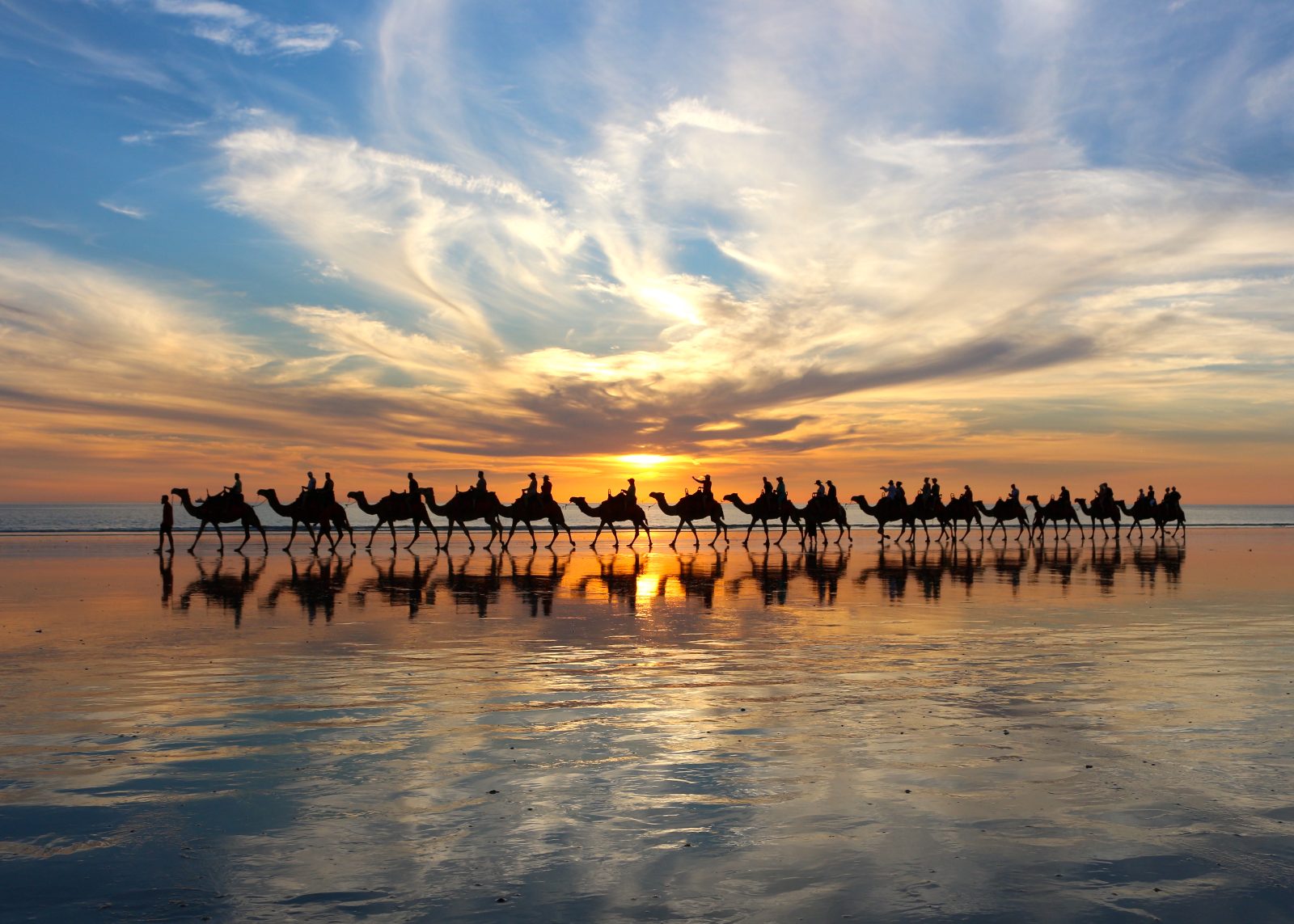
Position yourself at the water's edge as the tide recedes to capture the camel silhouettes reflected in the wet sand.

Cable Beach's camel trains move across 22 kilometers of white sand twice daily, and the visual payoff depends entirely on your position relative to the sun. This guide maps the reliable vantage points, explains why golden hour matters more here than at most beaches, and walks through the exposure decisions that turn a snapshot into a keeper.
Quick answer
The strongest cable beach camel rides photos come from positioning yourself north of the camel train during the final 40 minutes before sunset, when the sun sits low behind the animals and the wet sand reflects orange light. Shoot from the shoreline with your back to the Indian Ocean, expose for the sky to render the camels and riders as clean silhouettes, and use a focal length between 70mm and 200mm to compress the caravan against the horizon. Morning departures offer softer light but lack the dramatic color gradient that makes Cable Beach's sunset rides instantly recognizable.
Red Sun Camels operates the only commercial camel rides on Cable Beach, running two daily departures that bookend the beach's most photographable hours. The sunset tour departs around 16:30 during winter months and closer to 18:00 in summer, timed so the caravan reaches the northern stretch of beach as the sun approaches the waterline. Morning tours leave at 07:00 year-round, offering cooler temperatures and fewer beachgoers in the frame. Photographing camel rides at Cable Beach requires understanding the interplay between wet sand, tidal reflection, and the angle of equatorial light. The beach faces west across the Indian Ocean, so sunset light travels horizontally across the sand rather than dropping vertically. This creates a natural studio setup: the sun becomes a backlight, the wet tidal zone acts as a reflector, and the camels move through the frame at a predictable walking pace. Silhouette shots work because the camels' profiles remain distinct even when reduced to black shapes—long necks, humped backs, and the rhythm of legs in motion telegraph the scene without requiring detail. Camera settings follow a straightforward formula. Set your exposure for the sky, not the camels, which forces the animals into shadow and preserves the gradient of color from pale yellow near the sun to deep violet overhead. A shutter speed of 1/500th or faster freezes the camels mid-stride, while ISO 200 to 400 keeps noise low in the shadow areas. Shoot in RAW if your camera allows it, since the dynamic range between bright sky and dark foreground often exceeds what a JPEG can hold. A polarizing filter cuts glare from the wet sand and deepens the blue in the sky, though it also reduces light by one to two stops. Timing your arrival matters as much as your settings. The beach opens at 08:00 daily, but photographers aiming for sunset shots should reach the sand by 17:00 to scout positions before the camel train appears. Walk north from the main access point near the Cable Beach Club Resort until you find a stretch where the sand slopes gently and tidal pools form natural leading lines. The camel train moves south to north, so positioning yourself ahead of their path lets you shoot them approaching rather than receding. Morning shooters have the advantage of emptier sand but must work with flat, even light that lacks the punch of golden hour.
“The sun becomes a backlight, the wet tidal zone acts as a reflector, and the camels move through the frame at a predictable walking pace.”
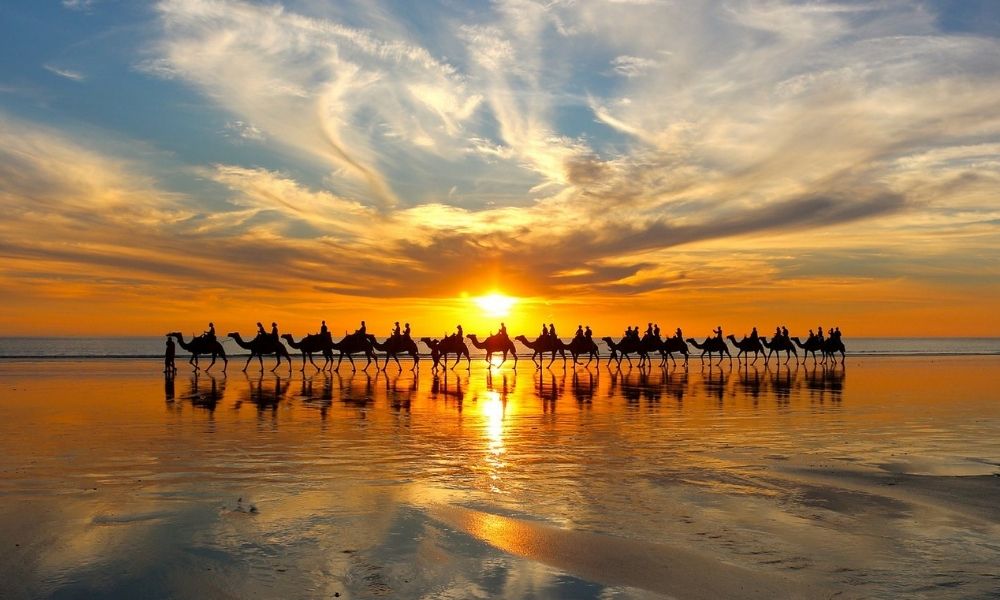
Sunset
Position yourself at the water's edge as the tide recedes to capture the camel silhouettes reflected in the wet sand.
Sunset
Stand slightly ahead of the walking route to frame the line of camels against the vibrant sunset sky.
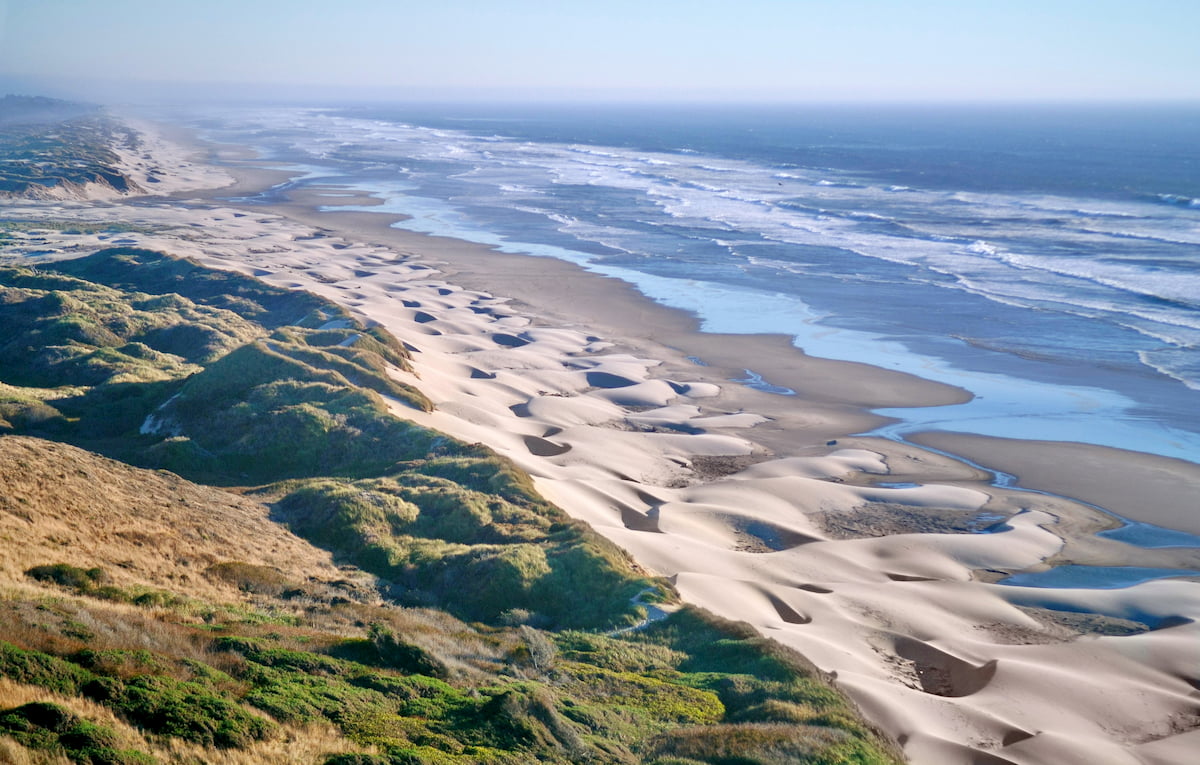
Late afternoon
View the beach from the elevated dune paths to capture the scale of the coastline and the approaching caravan.
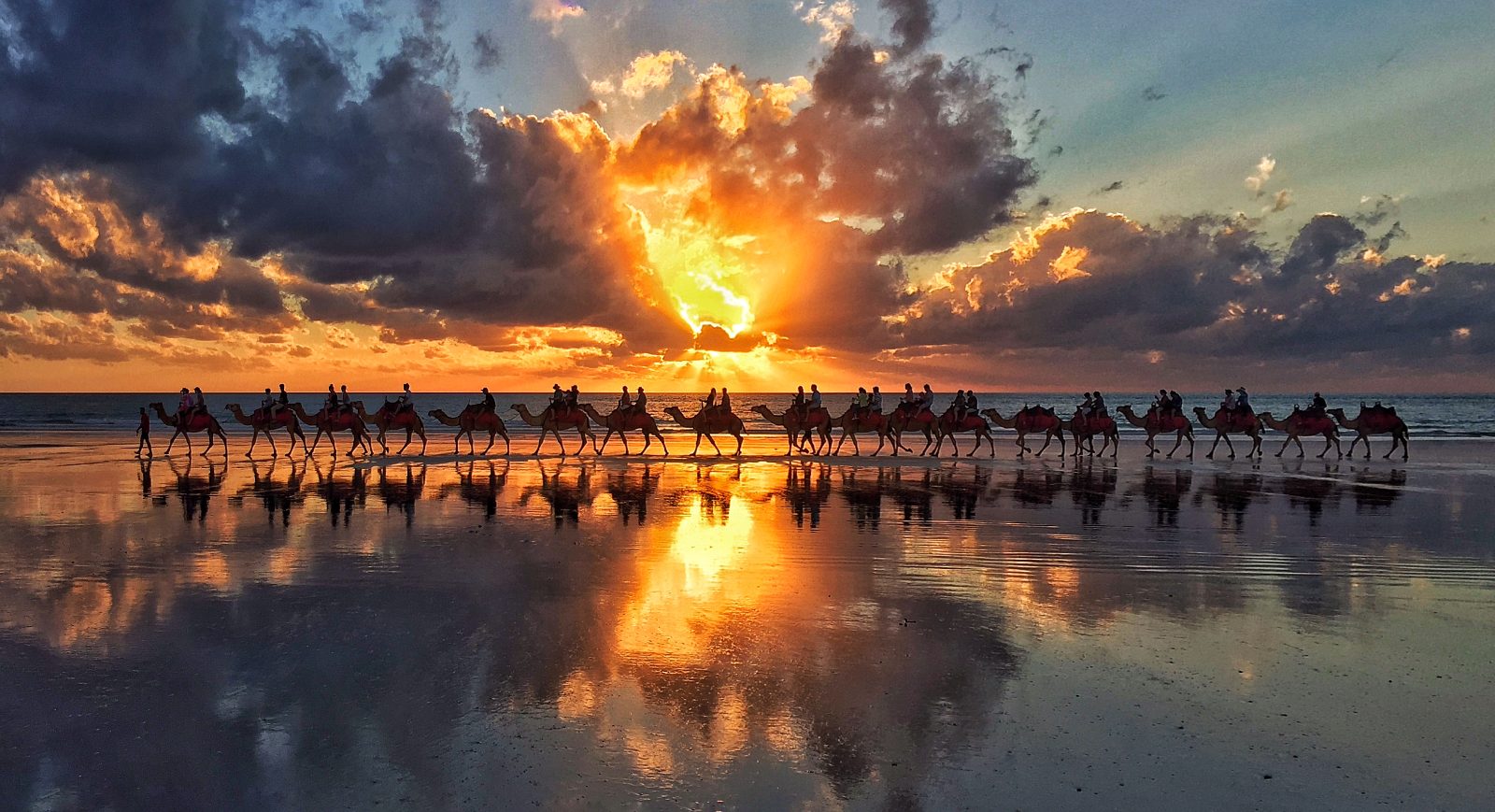
Sunset
Walk onto the exposed sand flats during low tide to obtain a low-angle shot of the camels against the horizon.
The golden hour, occurring shortly before sunset, offers the most favorable lighting for camel ride photography by minimizing harsh shadows. Visitors should follow the best arrival window of 08:00–18:00 to avoid mid-day heat while capturing optimal light.
Warm, clear days (25°C–30°C)
Cooler temperatures and consistent sunshine provide reliable lighting for outdoor photography.
Hot and humid (30°C–35°C)
Higher chance of cloud cover, though storms can provide dramatic sky contrasts.
—
Soft, diffuse light provides even illumination across the beach and camel silhouettes.
Verdict: For the clearest photography conditions and stable weather, aim for the dry season months of May through September during either early morning or late afternoon sessions.
Cable Beach camel rides operate on a consistent daily schedule throughout the week. Photographers should align their arrival times with these service hours to capture imagery of the camels on the beach.
Access to Cable Beach itself is free for all visitors. Fees are only applicable for those participating in guided camel rides.
Verdict: Individual riders pay fees specific to the camel tour package chosen through the official operator.
Cable Beach is located in Broome, Western Australia, with camel tour departure points situated directly on the sand. Visitors typically access the beach via the main Cable Beach Road entrance.
Cable Beach Road toward the beach car park
Broome Explorer Bus to Cable Beach
Direct service to the Cable Beach car park
Follow signs for the main beach access ramp to reach the departure area. Aim for the 08:00–18:00 arrival window to ensure you have sufficient time to park and reach the sand before your tour.
Everything you need to know about cable beach camel rides photos
To capture high-quality cable beach camel rides photos, consider positioning yourself along the shoreline to catch the silhouette of the animals against the Indian Ocean. Utilizing natural light during the morning or evening helps enhance the texture of the sand and the coast. Photography is encouraged throughout the experience, though you should secure your camera equipment while mounted on the animal. Many visitors find that capturing a sequence of these desert-adapted creatures traversing the tide line makes for excellent cable beach camel rides photos. For sunset sessions, aim for the golden hour to achieve dramatic shadows and vibrant sky colors in your cable beach camel rides photos. Ensure your camera settings are adjusted for low-light conditions as the sun dips below the horizon to maintain clarity. Reservations are recommended to secure your place on a camel trek, as availability can fill up quickly during peak travel seasons. You may book your experience through the official operator website to ensure your spot is confirmed well before your arrival. Yes, children are generally welcome on these tours, though they must meet specific safety requirements set by the operators. Check the booking information for age and weight restrictions to ensure a smooth experience for the whole family. Cable Beach itself offers free public access. While there is no charge to walk on the sand, please note that tour fees apply specifically for the camel rides themselves.
Weight Limits and Requirements
Read more GuideBroome Camel Tours
Read more Tickets & toursCamel Ride Booking & Tickets
Read more Tickets & toursSunset Camel Tours
Read more GuideCustomer Reviews & Experiences
Read more GuideSafety and FAQs
Read more Tickets & toursCamel Ride Prices
Read more