English| USD
Suggested for you
More currencies
Choose a language
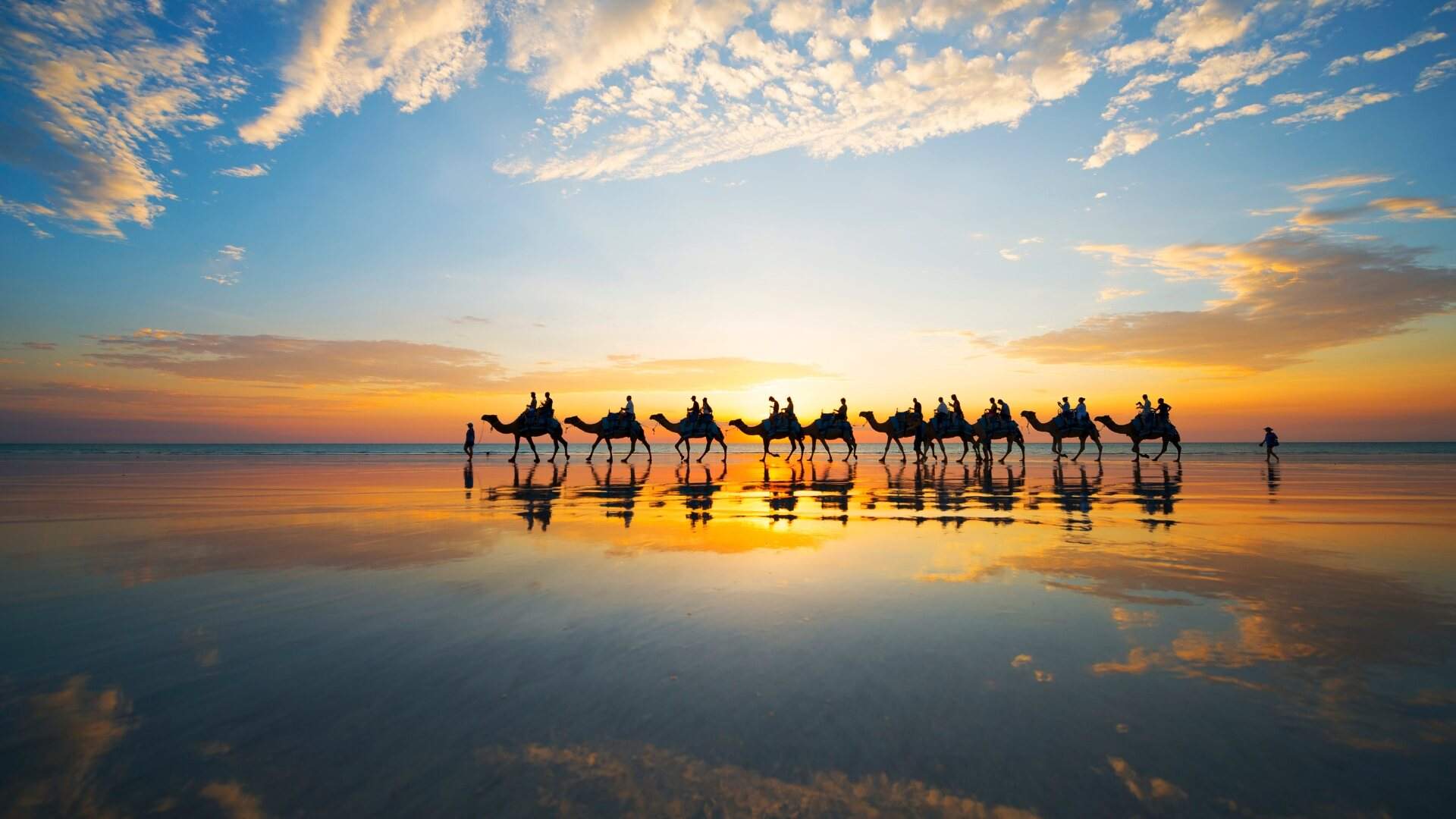
Cable Beach's camel rides run year-round, with operators offering morning and sunset departures along the 22-kilometre stretch of white sand. Rides depart from designated zones north of the surf lifesaving club. Arrival timing determines your lighting—early for soft pastels, late afternoon for the crimson horizon that draws photographers from across Western Australia.
Quick answer
Cable Beach camel rides in Broome, WA operate daily from 08:00 to 19:00, with morning and sunset departures available through licensed operators. Beach access is free; operators charge separate fees for guided camel tours. Optimal arrival windows fall between 08:00 and 18:00 to secure preferred departure slots, particularly during the April-to-October dry season when visitor numbers peak and sunset rides book out days in advance.
Broome's camel tradition began in the 1880s when Afghan cameleers supplied pearling camps along the Kimberley coast, and today cable beach camel rides broome wa continue that heritage with daily tours departing from Cable Beach's northern staging areas. Operators typically run two-hour sessions, though individual ride durations vary by package—most tourists book the sunset departure, which launches approximately 90 minutes before dusk to position riders along the tideline as the sun drops toward the Indian Ocean. The beach itself remains public land with no entry gate, but commercial camel operations require permits and operate from fenced staging zones near the northern rock formations. Red Sun Camels, the longest-running operator, maintains a base near the Cable Beach Club Resort and coordinates departures through advance bookings. Walk-up availability exists during low season—May through August—but the peak dry months of June and July see morning slots fill by midday and sunset rides often require 48-hour notice. Tidal cycles matter less here than at southern Australian beaches; Cable Beach's gentle gradient and minimal tidal range mean the firm sand corridor remains rideable throughout the day. Operators do adjust northern versus southern staging points based on wind direction—easterlies push tours south toward Gantheaume Point, while sea breezes favor northern routes toward Minyirr Park. First-time riders often ask about camel temperament; the working animals here are Bactrian-dromedary crosses, selected for steady gait and heat tolerance, and handlers conduct daily health checks before each departure. Broome's climate dictates practical considerations beyond simple scheduling. November-to-March wet season brings afternoon thunderstorms and humidity above 80 percent, which doesn't cancel rides but does reduce visibility and comfort—most international visitors target the dry season for this reason. Western Australia's remoteness adds a logistical layer; Broome sits 2,200 kilometres north of Perth, accessible primarily by air, so multi-day itineraries are standard. Operators recommend arriving at Cable Beach 20 minutes before your booked departure to complete waivers, receive safety briefings and meet your assigned camel. The beach's western exposure means sunset timing shifts across the year—June sunsets occur near 18:00, while December sees golden hour stretch past 19:00, and operators adjust final departure slots accordingly. Photography drives much of the cable beach camel rides broome wa appeal, and the northern staging area positions riders against unobstructed horizons free of resort structures. Handlers pause at designated intervals for group shots, and the reflected light on wet sand after receding tide creates the mirror effect seen in marketing images. Riders concerned about mobility should note that camels kneel for mounting, but the initial lurch as the animal stands remains abrupt—handlers provide stirrup assistance and verbal cues. Post-ride, most visitors walk the 800 metres south to the Cable Beach amenities block, where rinse showers remove red pindan dust before returning to town.
“The reflected light on wet sand after receding tide creates the mirror effect that defines Cable Beach camel photography.”
The period from May to October offers the most consistent conditions for camel rides, characterized by low humidity and clear skies. Selecting a morning or sunset tour ensures participants avoid the peak heat of the midday sun while benefiting from optimal lighting conditions.
Dry, 25°C to 30°C
This dry season provides reliable weather for beach activities. Sunset rides are highly sought after during these months.
High humidity, 30°C to 35°C
The wet season brings higher temperatures and potential for afternoon storms. Morning tours are preferable to manage heat exposure.
—
Mid-week morning sessions offer quieter beach conditions and cooler air temperatures. This window is suitable for those seeking a more solitary experience.
Verdict: For the most stable climate and light, aim for sunset tours between May and September.
A few steps will ensure you're ready for your Cable Beach camel ride in Broome.
Everything you need to know about cable beach camel rides broome wa
For your camel trek, consider bringing a hat, sunscreen, water, and comfortable clothing suitable for the coastal environment. Many travelers find that capturing photographs of the Indian Ocean during the transition from day to dusk is a highlight of their trip. Ensure your camera or phone is fully charged before you arrive.
Weight Limits and Requirements
Read more Tickets & toursCamel Ride Booking & Tickets
Read more Tickets & toursSunset Camel Tours
Read more GuideCustomer Reviews & Experiences
Read more GuideSafety and FAQs
Read more GuidePhotos and Memories
Read more Tickets & toursCamel Ride Prices
Read more